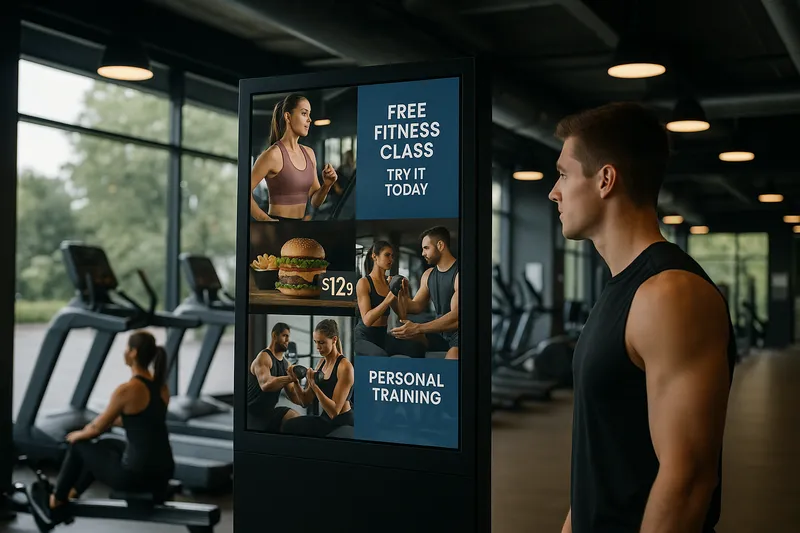
Fitness centers operate in an environment where attention is fragmented and time is limited. Members move through multiple zones—cardio floors, weight areas, studios, locker rooms, and reception—each with different dwell times, moods, and information needs. Static posters and printed schedules no longer match the pace or expectations of modern gym-goers. Digital signage fills this gap by delivering timely, visually compelling content that informs, motivates, and even generates revenue without demanding active attention from members focused on their workout.
This article explores how fitness centers and gyms can deploy digital signage strategically across their facilities, what content works best in each zone, how to measure impact, and practical considerations for hardware, software, and content management.
Why Fitness Centers Need Digital Signage
The average gym member spends 45 to 90 minutes per visit, but much of that time involves brief transitions between exercises, waiting for equipment, or recovering between sets. These micro-moments of downtime represent valuable attention windows. Unlike retail environments where the goal is to drive immediate purchases, gym signage serves multiple objectives simultaneously: reducing perceived wait times, reinforcing brand community, promoting services, and creating a modern atmosphere that aligns with member expectations.
Printed materials in gyms face constant wear from humidity, sweat, and frequent handling. Schedule changes require reprinting and manual replacement across multiple locations. Digital displays eliminate this friction. Updates propagate instantly across all screens, ensuring every member sees current class times, instructor substitutions, or temporary equipment closures.
Beyond operational efficiency, digital signage addresses a deeper member retention challenge. Fitness businesses live and die by retention rates. Industry data consistently shows that engaged members—those who feel connected to the community, informed about offerings, and supported in their goals—remain active longer. Screens that celebrate member achievements, introduce staff, or showcase transformation stories build emotional connection in ways that static media cannot replicate.
Zone-by-Zone Content Strategy
Effective gym signage maps content to physical space and member mindset. What works in a high-energy cardio zone fails in a calm stretching area. Understanding these contextual differences separates useful signage from visual noise.
Reception and Entry Areas
The entry zone sets first impressions and handles the highest member traffic. Content here should prioritize wayfinding and immediate utility. Digital directories showing floor layouts, class schedules for the next four hours, and real-time occupancy indicators for popular zones help members plan their session before they change.
This zone also supports revenue objectives tastefully. Promotional content for personal training packages, upcoming member events, or retail specials can rotate without overwhelming new arrivals. The key restraint is timing: promotional content should never dominate over utility information during peak entry hours. Schedule-aware playlists can shift from service-heavy messaging during morning rushes to promotional content during slower midday periods.
Cardio and Strength Floors
Members on treadmills, bikes, and ellipticals represent a captive audience with extended dwell times—twenty to forty minutes of continuous visual availability. However, their primary cognitive focus remains on their workout. Content here must respect that hierarchy.
Effective cardio floor content includes: silent-form video demonstrations of proper technique for featured exercises, rotating motivational quotes that acknowledge effort without being patronizing, and subtle community metrics like total club workouts completed this week or participation challenges. Music video-style content or ambient nature footage can also improve perceived exertion and time passage, though licensing requirements must be verified.
Avoid dense text, complex infographics, or promotional messaging that requires decision-making. Members in motion mode process simple visual signals more effectively than detailed reading.
Group Fitness Studios
Studio signage serves different purposes depending on whether classes are in session. Between classes, screens display upcoming schedules, instructor bios with credentials and specialty areas, and equipment setup instructions for the next session. During classes, some facilities repurpose studio screens as timer displays, form reference visuals, or ambient lighting companions synchronized to class intensity.
Instructor profiles deserve particular attention. Members often develop loyalty to specific trainers. Digital signage that introduces new instructors, showcases continuing education certifications, or shares brief personal philosophies helps members feel they know their trainers beyond the class context. This familiarity drives class attendance and personal training inquiries.
Locker Rooms and Recovery Areas
These zones represent lower-energy, higher-reflection moments in the member journey. Members are more receptive to detailed content here than on the workout floor. Nutrition tips, recovery technique videos, wellness articles formatted for screen reading, and community announcements perform well.
Recovery areas near saunas, steam rooms, or stretching zones can feature slower-paced content: guided breathing animations, flexibility routine demonstrations, or mindfulness prompts. The atmosphere should complement relaxation rather than demand attention.
Locker room signage also presents an opportunity for secondary revenue through contextual partnerships. Local healthy meal delivery services, physical therapy clinics, or sports apparel retailers can sponsor content that genuinely serves member interests. The line between useful information and intrusive advertising is thin here; sponsored content must deliver clear value to be acceptable.
Staff and Trainer Communication
Back-of-house screens in trainer offices, break rooms, and equipment storage areas often get overlooked in signage planning. These displays serve internal communication needs: schedule changes, cleaning protocols, equipment maintenance alerts, and sales performance metrics for training staff. Keeping internal teams informed through the same digital infrastructure reduces email load and ensures floor staff see critical updates without checking phones.
Content Types That Perform in Fitness Environments
Not all digital content translates well to gym contexts. Based on deployment patterns across fitness facilities, several content categories consistently deliver engagement without disrupting the workout environment.
Dynamic Class Schedules
The most requested feature in gym digital signage is reliable, current class scheduling. Members plan visits around specific classes, and outdated printed schedules create frustration and front-desk congestion. Digital displays showing today’s complete schedule with real-time capacity indicators, instructor names, and studio locations solve this problem permanently. Integration with the club’s booking system enables live updates when classes reach capacity or substitute instructors cover sessions.
Member Recognition and Community Building
Screens that celebrate member achievements—completion of milestone workouts, participation in charity events, or transformation progress—build community without requiring member-initiated social media engagement. Recognition content should remain anonymous or use only first names with permission, respecting privacy preferences. Celebration content reinforces the message that individual effort matters within the larger community.
Educational Micro-Content
Brief, visually supported tips on exercise form, nutrition fundamentals, or recovery practices position the facility as a knowledge resource rather than just equipment rental. Educational content works best in digestible formats: ten-second video loops showing a single stretch, rotating tips formatted as bold text with minimal supporting detail, or before-and-after form corrections. The goal is awareness, not comprehensive instruction; detailed education belongs in personal training sessions or dedicated workshops.
Large facilities, especially multi-level clubs or those sharing buildings with other tenants, benefit from directional signage. Digital wayfinding can adapt to temporary situations—construction detours, relocated equipment, or special event layouts—in ways that static signage cannot match. Interactive kiosk-style displays near entry points allow members to search for specific equipment, classes, or amenities and receive visual directions.
Secondary revenue streams—personal training, small group sessions, nutrition consultations, retail, and membership upgrades—can be promoted through digital signage without the hard-sell approach that members often resent. The key is contextual relevance. Training promotions belong in areas where members have just completed workouts and feel the value of professional guidance. Retail promotions work best near exit paths when members are heading toward the front desk anyway.
Time-based promotions also perform well: limited-time offers on personal training packages during January resolution season, summer preparation specials, or referral incentives with clear expiration dates. Urgency drives action, but constant urgency creates noise. Seasonal promotional blocks separated by months of non-promotional content maintain credibility.
Technical and Operational Considerations
Deploying digital signage in fitness environments presents specific technical challenges that differ from office or retail deployments.
Hardware Durability and Placement
Gym environments expose electronics to vibration from dropped weights, elevated humidity from showers and pools, temperature variations between air-conditioned floors and heated studios, and accidental contact with equipment or cleaning supplies. Consumer-grade displays and media players fail quickly in these conditions.
Commercial displays rated for 16/7 or 24/7 operation with adequate ventilation and dust resistance are essential. For areas near pools, saunas, or high-humidity zones, consider IP-rated enclosures or displays specifically engineered for wet environments. Screen placement should avoid direct spray paths from cleaning routines and maintain sufficient clearance from swinging weights, resistance bands, or cable machine travel arcs.
Audio Considerations
Most gym signage operates without audio. The facility already manages background music systems, and competing audio sources create cacophony. Content should be designed for silent viewing with on-screen text replacing voiceover. Where audio is necessary—for example, in studio timer applications—directional speakers or headphone integration prevent audio bleeding into adjacent zones.
Network and Content Management
Fitness facilities typically operate robust Wi-Fi for member use, but signage networks should ideally run on separate infrastructure or VLANs to ensure reliable bandwidth for content updates and monitoring. Cloud-based content management systems allow marketing staff or general managers to update content remotely without visiting each screen physically.
For chains or franchises, centralized content management becomes essential. A corporate marketing team can distribute brand-compliant content while allowing individual locations to overlay local class schedules, instructor profiles, and regional promotions. Role-based access controls ensure that local staff can update time-sensitive information without modifying corporate brand messaging.
Power and Mounting Safety
Wall-mounted displays in weight areas require professional installation with appropriate anchors rated for the specific wall material and expected loads. Floor-standing displays need stable bases resistant to accidental bumping. All mounting solutions must account for vibration transmission from nearby equipment or music bass frequencies, which can loosen standard mounts over time.
Power outlets in renovated gym spaces are often scarce. Planning cable runs during facility design or major renovation prevents the extension-cord hazards that result from retrofit installations.
Measuring Impact and ROI
Digital signage investments in fitness centers compete with equipment purchases, facility upgrades, and marketing spend for budget approval. Demonstrating clear return justifies ongoing investment and guides content optimization.
Attendance and Engagement Metrics
Class attendance trends before and after digital schedule deployment provide direct operational metrics. If digital displays reduce front-desk schedule inquiries by 40 percent, staff time reallocates to higher-value member interactions. Personal training consultation requests tracked against promotional display timing show revenue attribution.
Some facilities implement QR codes on promotional content linking to booking pages or information requests. Scan rates indicate content relevance and placement effectiveness. Low scan rates suggest either poor placement, un compelling offers, or friction in the follow-through process.
Member Satisfaction and Retention
Quarterly member surveys can include questions about information accessibility and facility modernity. While digital signage rarely appears as the primary retention driver, it contributes to the overall experience quality that members cite when renewing. Exit surveys for departing members sometimes reveal that poor communication—missed schedule changes, unawareness of services, or feeling disconnected from the community—played a role in cancellation decisions that signage could have prevented.
Revenue Attribution
Secondary revenue tracking tied to promotional campaigns provides concrete financial returns. If a personal training promotion displayed for two weeks generates twelve consultation bookings compared to a baseline of three during comparable periods, the revenue lift attributable to signage becomes calculable. This attribution requires disciplined tracking—staff must log how members heard about promotions—but yields the most persuasive ROI data for budget renewal conversations.
Common Pitfalls to Avoid
Fitness center digital signage fails most often through overloading rather than underinvestment.
Content Overload
Displaying too much information simultaneously destroys readability. Members passing by on a treadmill at six miles per hour cannot process dense text blocks. Each screen should communicate one primary message at a time with generous visual breathing room. Rotation schedules that change content every fifteen to thirty seconds maintain freshness without demanding sustained attention.
Stale Content
Nothing undermines digital signage faster than outdated information. Class schedules from last month, expired promotions, or references to past events signal neglect. Automated content feeds, calendar integrations, and scheduled expiration dates prevent staleness even when staff forget to update manually.
Misaligned Placement
Screens positioned where members cannot comfortably view them—too high, too low, behind glare sources, or in areas where equipment blocks sightlines—waste investment. Viewing angle analysis during installation planning prevents these issues. Similarly, screens placed where members face away from them during typical exercises, such as behind cardio equipment rather than in front, serve no purpose.
Ignoring the Member Experience
Signage exists to serve members, not just to broadcast messages at them. Content that members find genuinely useful—current schedules, technique tips, community recognition—earns attention. Content that serves only the facility’s promotional goals without member value trains members to ignore screens entirely. The most successful gym signage balances utility and promotion heavily toward the utility side.
Getting Started: A Practical Roadmap
For facilities beginning digital signage deployment, a phased approach reduces risk and builds organizational learning.
Phase One: Entry and Reception
Start with one to three screens at the entry and reception area displaying class schedules, daily announcements, and basic wayfinding. This zone has the highest traffic, lowest environmental stress, and clearest operational need. Success here establishes internal credibility for broader deployment.
Phase Two: Cardio and Studio Zones
Expand to cardio floors and studio entry areas with content tailored to those specific environments. This phase requires more attention to hardware durability and content specificity but reaches members during longer dwell periods.
Phase Three: Locker Rooms and Recovery
Add screens in locker rooms, recovery areas, and back-of-house spaces. These deployments complete the member journey coverage and enable internal communication improvements. Recovery area content may require different pacing and tone than high-energy floor zones.
Phase Four: Advanced Integration
With the foundation established, integrate more sophisticated capabilities: real-time occupancy data, interactive wayfinding kiosks, member recognition feeds from social media or app integrations, and targeted content triggered by time of day, day of week, or seasonal programming.
Conclusion
Digital signage in fitness centers and gyms succeeds when it respects the unique rhythm of exercise environments. Members move through distinct mental states—from focused exertion to social connection to recovery—and effective signage adapts to each context rather than broadcasting identical messages everywhere.
The facilities that gain the most from their screen investments treat digital signage as an operational tool first and a marketing channel second. Class schedules, real-time updates, and community content deliver daily utility that earns member attention. Promotional messaging layered onto that utility foundation generates secondary revenue without creating the resentment that overt advertising often provokes.
For gym operators evaluating digital signage, the question is not whether screens can be installed, but whether the organization can commit to keeping content relevant, current, and genuinely useful. Hardware is straightforward. Sustained content discipline separates installations that members value from those they ignore. The investment pays returns in reduced administrative friction, improved member satisfaction, stronger community connection, and incremental revenue—but only when the content strategy matches the physical and psychological environment of the modern fitness center.