The real estate industry thrives on first impressions. Whether it is a potential buyer walking into a brokerage office or a renter exploring an apartment lobby, the visual experience shapes decisions before a single word is spoken. Digital signage has emerged as one of the most effective tools for real estate professionals to present properties, build trust, and create immersive environments that convert interest into action.
This guide explores how digital signage is reshaping property marketing, from interactive window displays to lobby directories, and provides actionable strategies for implementation across residential, commercial, and development projects.
Why Real Estate Needs Digital Signage
Traditional real estate marketing relies heavily on printed brochures, static window cards, and paper listing sheets. While these materials have served the industry for decades, they carry inherent limitations:
- Static content cannot be updated in real time when properties sell or prices change.
- High print costs accumulate with every revision, seasonal campaign, or new listing.
- Limited visual impact fails to capture the emotional dimension of a property.
- Environmental waste from discarded materials harms sustainability credentials.
Digital signage solves each of these problems. A single screen can display hundreds of listings, update instantly when a property goes under contract, showcase video walkthroughs, and create a modern brand impression that differentiates a brokerage from competitors.
Key Applications of Digital Signage in Real Estate
Property Showcases and Window Displays
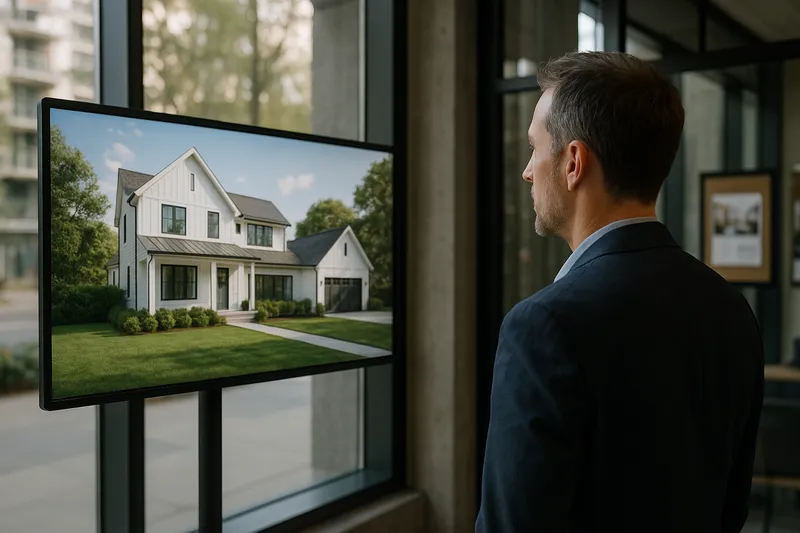
Real estate agency windows are high-value advertising real estate. Passersby form impressions within seconds. Digital window displays allow agencies to:
- Rotate featured listings throughout the day, matching content to foot traffic patterns.
- Display high-resolution property photography and cinematic video tours.
- Highlight neighborhood amenities such as schools, parks, and transport links.
- Adjust messaging based on time of day or season, for example, promoting family homes during school hours and luxury apartments during evening commute times.
Modern high-brightness displays rated for 1500 to 2500 nits ensure visibility even in direct sunlight, making them suitable for street-facing installations.
Interactive Lobby and Reception Directories
In commercial buildings, residential towers, and mixed-use developments, digital directories serve multiple audiences:
- Visitors can search by tenant name, view floor plans, and get wayfinding directions.
- Prospective tenants see available commercial spaces, square footage, and lease terms.
- Property managers push building announcements, maintenance schedules, and community events.
Touchscreen kiosks with intuitive interfaces reduce reception workload while providing a professional, tech-forward experience that reflects well on property management.
Sales Centers and Model Home Experiences
Property developers face a unique challenge: selling spaces that do not yet exist. Digital signage bridges the imagination gap through:
- 3D architectural visualizations and flythrough animations of unbuilt developments.
- Virtual reality stations paired with large screens for group viewing of immersive walkthroughs.
- Material and finish selectors that let buyers visualize different flooring, cabinetry, and fixture options in real time.
- Neighborhood context displays showing proximity to amenities, transit times, and future infrastructure plans.
These tools reduce sales cycles by helping buyers commit emotionally before construction completion.
Open House and Property Tour Enhancement
During open houses, digital signage supplements the physical walkthrough with contextual information:
- Screens in key rooms can display renovation ideas, furniture layout suggestions, or energy efficiency data.
- QR codes on displays link to detailed property reports, strata documents, or mortgage calculators.
- Time-lapse photography of neighborhood development adds narrative depth to new construction sales.
This layered information approach answers buyer questions proactively, reducing the burden on agents and accelerating decision timelines.
Content Strategy for Real Estate Digital Signage
Effective real estate signage requires more than hardware installation. Content strategy determines whether displays generate leads or become ignored background noise.
Prioritize Visual Quality
Real estate is inherently visual. Every listing displayed on screen should include:
- Professional photography with consistent color grading and composition standards.
- Video walkthroughs shot with stabilized cameras and cinematic editing.
- Aerial drone footage for properties with land, views, or location advantages.
- Lifestyle imagery showing how spaces function during different times of day.
Low-quality images undermine credibility. Invest in professional visual assets or risk screens that diminish rather than enhance brand perception.
Viewers process screen content differently than print. Design listings for rapid comprehension:
- Lead with a single hero image occupying at least sixty percent of the display area.
- Layer price, address, bed and bath count, and square footage as clean typographic overlays.
- Use color coding or badges for status indicators such as new listing, price reduced, open house today, or under contract.
- Maintain consistent templates across all listings to build visual familiarity.
Update Content in Real Time
Stale listings damage trust. Integrate digital signage with your property management system or customer relationship management platform to ensure automatic updates when:
- A property is sold or leased.
- Price adjustments occur.
- Open house times change.
- New listings enter the market.
Manual content updates introduce delays and errors. Automation ensures accuracy without operational overhead.
Segment by Location and Audience
Different properties attract different buyers. Use playlist rules to match content to context:
- Premium office locations display luxury residential and commercial investment properties.
- Suburban branches emphasize family homes, school catchments, and community amenities.
- Development sales centers focus on floor plans, construction timelines, and early-bird incentives.
Context-aware content increases relevance and conversion rates.
Hardware Considerations for Real Estate Environments
Selecting appropriate hardware ensures reliability and visual impact across diverse real estate settings.
Window-Facing Displays
Street-facing agency windows demand commercial-grade screens with:
- High brightness ratings of at least 1500 nits for shaded locations, or 2500 nits for direct sunlight exposure.
- Anti-glare coatings to maintain readability under variable lighting conditions.
- Thermal management systems to prevent overheating in enclosed window boxes.
- Vandal-resistant glass for ground-floor installations in high-traffic areas.
Consumer televisions will fail rapidly in these conditions due to insufficient brightness, poor heat dissipation, and lack of commercial warranties.
Indoor Lobby and Sales Center Screens
Interior environments allow more flexibility in hardware selection:
- Large-format commercial displays from fifty-five to eighty-five inches create immersive property showcases in sales centers.
- Interactive touchscreens with projected capacitive technology provide responsive navigation for directories and configurators.
- Video wall configurations using narrow-bezel commercial panels can scale to dramatic sizes for flagship developments.
- Portrait orientation suits vertical property photography and floor plan display more naturally than landscape formats.
Outdoor Development Site Displays
Construction sites and development previews require ruggedized hardware:
- Weatherproof enclosures with appropriate ingress protection ratings for rain, dust, and temperature extremes.
- High-brightness panels visible in daylight conditions.
- Secure mounting systems resistant to tampering or theft.
- Remote monitoring capabilities to diagnose issues without site visits.
Measuring Impact and Return on Investment
Digital signage investments in real estate should deliver measurable outcomes. Track these metrics to evaluate performance:
Engagement Metrics
- Dwell time in front of displays, measured through infrared or camera-based analytics.
- Interaction rates on touchscreen directories, including most-searched tenants or listings.
- Content performance identifying which property types generate the most screen attention.
Conversion Metrics
- Inquiry attribution through unique QR codes or short URLs displayed on screen.
- Appointment bookings generated from open house signage compared to traditional channels.
- Sales cycle reduction for properties marketed with digital versus print-only campaigns.
Operational Metrics
- Print cost savings from eliminated brochure and window card production.
- Staff time savings from self-service directory and information kiosks.
- Content update speed measured in minutes rather than days for new listings or price changes.
Implementation Best Practices
Successful real estate digital signage deployments follow a structured approach:
Phase One: Audit and Strategy
- Inventory existing marketing materials and identify content gaps.
- Map customer journeys through offices, lobbies, and sales centers.
- Define audience segments and content priorities for each location.
- Establish brand guidelines for photography, typography, and motion design standards.
Phase Two: Pilot Deployment
- Install displays in one high-traffic location to test content resonance.
- Measure baseline engagement and conversion metrics.
- Refine templates and playlist logic based on initial data.
- Gather staff feedback on operational impact and workflow integration.
Phase Three: Scale and Optimize
- Roll out to additional locations with standardized hardware and content frameworks.
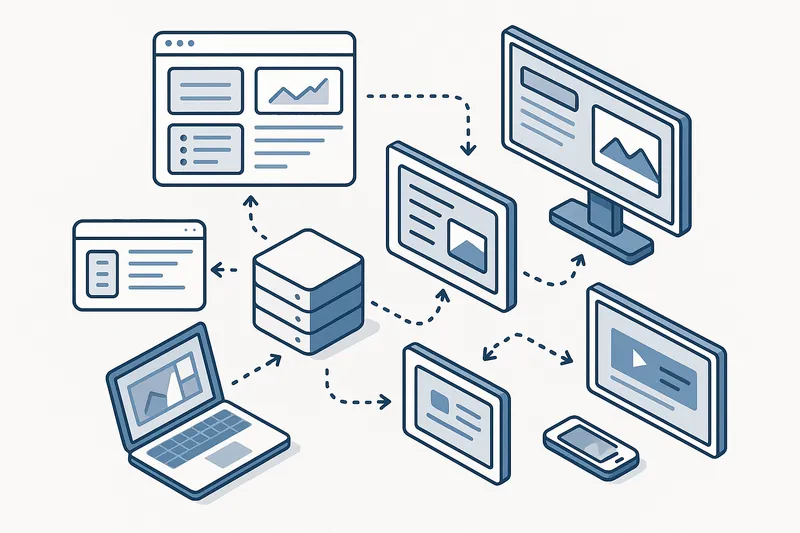
- Integrate with property management systems for automated content updates.
- Implement analytics dashboards to monitor performance across the network.
- Continuously test new content formats such as virtual tours, neighborhood drone footage, or market trend visualizations.
Common Pitfalls to Avoid
Using Consumer Hardware in Commercial Environments
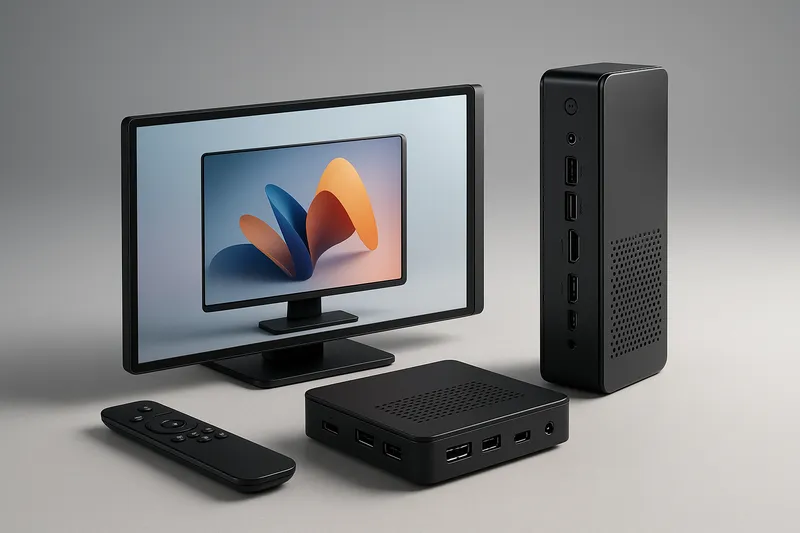
Residential televisions lack the brightness, durability, and warranty coverage required for real estate applications. The short-term cost savings evaporate when screens fail and require replacement within months.
Neglecting Content Refresh Cycles
Even the most beautiful display becomes invisible when content stagnates. Establish minimum refresh frequencies, such as weekly listing rotations and daily featured property updates.
cramming too many listings onto a single display reduces the impact of each property. Prioritize quality over quantity, showcasing fewer listings with richer visual and narrative content.
Ignoring Mobile Integration
Digital signage should bridge to mobile experiences, not replace them. Every listing displayed should offer a frictionless path to mobile follow-up through QR codes, NFC tags, or SMS short codes.
Conclusion
Digital signage has transitioned from a novelty to a necessity in competitive real estate markets. The technology enables agencies, developers, and property managers to present properties with unprecedented visual impact, update information instantly as markets shift, and create memorable experiences that convert casual interest into serious inquiry.
The investment required for commercial-grade displays and professional content creation is offset by eliminated print costs, faster sales cycles, and differentiated brand positioning. Organizations that embrace digital signage today establish the operational foundation and content capabilities that will define industry standards tomorrow.
For real estate professionals evaluating their first digital signage deployment, start with a single high-impact location, measure results rigorously, and scale based on demonstrated return rather than assumptions. The data will guide expansion more reliably than intuition alone.